Intel® Turbo Boost TechnologyIntel® Turbo Boost Technology dynamically increases the processor's frequency as needed by taking advantage of thermal and power headroom to give you a burst of speed when you need it, and increased energy efficiency when you don’t.
Intel® vPro™ TechnologyIntel® vPro™ Technology is a set of security and manageability capabilities built into the processor aimed at addressing four critical areas of IT security: 1) Threat management, including protection from rootkits, viruses, and malware 2) Identity and web site access point protection 3) Confidential personal and business data protection 4) Remote and local monitoring, remediation, and repair of PCs and workstations.
Intel® Hyper-Threading TechnologyIntel® Hyper-Threading Technology (Intel® HT Technology) delivers two processing threads per physical core. Highly threaded applications can get more work done in parallel, completing tasks sooner.
Intel® Virtualization Technology (VT-x)Intel® Virtualization Technology (VT-x) allows one hardware platform to function as multiple “virtual” platforms. It offers improved manageability by limiting downtime and maintaining productivity by isolating computing activities into separate partitions.
Intel® Virtualization Technology for Directed I/O (VT-d)Intel® Virtualization Technology for Directed I/O (VT-d) continues from the existing support for IA-32 (VT-x) and Itanium® processor (VT-i) virtualization adding new support for I/O-device virtualization. Intel VT-d can help end users improve security and reliability of the systems and also improve performance of I/O devices in virtualized environments.
Intel® VT-x with Extended Page Tables (EPT)Intel® VT-x with Extended Page Tables (EPT), also known as Second Level Address Translation (SLAT), provides acceleration for memory intensive virtualized applications. Extended Page Tables in Intel® Virtualization Technology platforms reduces the memory and power overhead costs and increases battery life through hardware optimization of page table management.
Intel® Trusted Execution TechnologyIntel® Trusted Execution Technology for safer computing is a versatile set of hardware extensions to Intel® processors and chipsets that enhance the digital office platform with security capabilities such as measured launch and protected execution. It enables an environment where applications can run within their own space, protected from all other software on the system.
Intel® 64Intel® 64 architecture delivers 64-bit computing on server, workstation, desktop and mobile platforms when combined with supporting software.¹ Intel 64 architecture improves performance by allowing systems to address more than 4 GB of both virtual and physical memory.
Spécifications
Autres caractéristiques
| Technologie Intel® Virtualization (Intel® VT) | VT-d/VT-x |
Caractéristiques
| Bit de verrouillage | Oui |
| États Idle | Oui |
| Évolutivité | 2S |
| Extension d'adresse physique (PAE) | Oui |
| Les options intégrées disponibles | Oui |
| Nombre maximum de voies PCI Express | 40 |
| Segment de marché | Server |
| Set d'instructions pris en charge | AVX |
| Technologies de surveillance thermique | Oui |
| Version des emplacements PCI Express | 3.0 |
Caractéristiques spéciales du processeur
| Accès mémoire Intel® Flex | Non |
| Clé de sécurité Intel® | Oui |
| Demande Intel® Based Switching | Oui |
| Intel® vPro™ Platform Eligibility | Oui |
| Intel® VT-x avec Extended Page Tables (EPT) | Oui |
| Nouvelles instructions Intel® AES (Intel® AES-NI) | Oui |
| Technologie de vitalisation d'Intel® (VT-x) | Oui |
| Technologie Intel® Hyper Threading (Intel® HT Technology) | Oui |
| Technologie Intel® Identity Protection (Intel® IPT) | Non |
| Technologie Intel® Turbo Boost | Yes |
| Technologie Intel® Virtualization Technology pour les E/S dirigées (VT-d) | Oui |
| Technologie SpeedStep évoluée d'Intel | Oui |
| Technologie Trusted Execution d'Intel® | Oui |
Conditions environnementales
Graphique
| Carte graphique intégrée | Non |
Mémoire
| Canaux de mémoire | Quad-channel |
| ECC | Oui |
| Mémoire interne maximum prise en charge par le processeur | 768 Go |
| Types de mémoires pris en charge par le processeur | DDR3-SDRAM |
| Vitesses d'horloge de mémoire prises en charge par le processeur | 1066/1333/1600/800 MHz |
Processeur
| Bus informatique | 7,2 GT/s |
| composant pour | Serveur/Station de travail |
| Enveloppe thermique (TDP, Thermal Design Power) | 80 W |
| Famille de processeur | Famille Intel® Xeon® E5 V2 |
| Fréquence de base du processeur | 2,1 GHz |
| Fréquence du processeur Turbo | 2,6 GHz |
| Largeur de bande de mémoire prise en charge par le processeur (max) | 51,2 Go/s |
| Lithographie du processeur | 22 nm |
| Mémoire cache du processeur | 15 Mo |
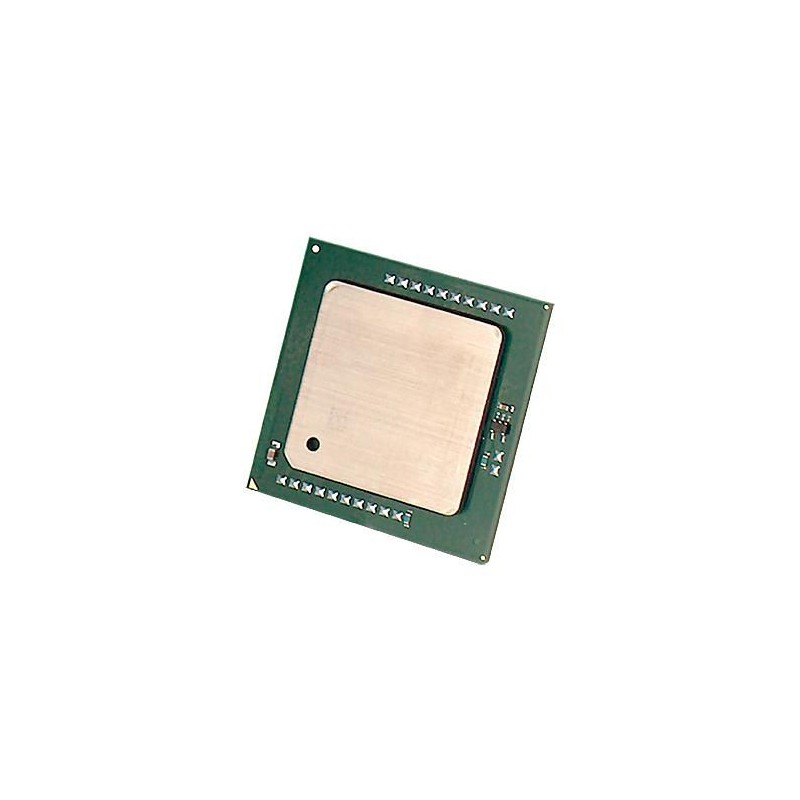
| Modèle de processeur | E5-2620V2 |
| Modes de fonctionnement du processeur | 64-bit |
| Nombre de coeurs de processeurs | 6 |
| Nombre de liens QPI | 2 |
| Nombre de threads du processeur | 12 |
| Plage de tension VID | 0.6 - 1.30 V |
| Socket de processeur (réceptable de processeur) | LGA 2011 (Socket R) |
| Type de bus | QPI |
| Type de cache de processeur | L3 |
Vendor information
| Brand Name | Hewlett Packard Enterprise |
| Warranty | 1 |